Zombie Sniper War 3 - Fire FPS
- 4.7
- Rating
- 10.00M
- Installs
- Free
- Price
 Analysis by App-foxy
I spent time with Zombie Sniper War 3 - Fire FPS as a mobile action game, and my first impression was clear: it is built around the simple appeal of lining up a shot, controlling the pace of an encounter, and trying to survive a world overrun by the dead. That focus makes it easy to understand, but it also means the experience is narrower than a full survival game or a broad military shooter. You are not choosing it for deep exploration or a large social system. You are choosing it for quick bursts of zombie combat where accuracy matters.
The game comes from JE Software AB and is free to download. It is aimed at a mature audience with a 17+ content rating, so I would not treat it as a casual title for children. Its store summary presents it as an offline zombie sniper FPS, and that offline angle is one of its most useful qualities: I can imagine opening it during a commute, while waiting for an appointment, or somewhere with unreliable reception without needing to turn the session into a multiplayer commitment.
Its popularity is easy to understand. The game has a 4.7 average from around 148 thousand ratings and has passed 10 million installs. Those figures suggest that the basic formula connects with a large audience, although they do not remove the need to consider the controls, visual intensity, and monetization before installing it. In my experience, those practical details matter more than a high store score when deciding whether a shooter feels comfortable to play every day.
You May Also Like

 Blood Strike: 2.5 Anniversary
Blood Strike’s Loadouts Turn Every Drop Into a Tactical Gamble
A close look at Blood Strike’s custom loadouts: how fast access to signature weapons reshapes its battle royale rhythm, rewards preparation, and narrows the gap between fights.

 Pandora - Music & Podcasts
Pandora’s Music Is Easy to Start, but Harder to Recover
Pandora’s strength is its low-effort path from a seed to a station. Its weak spot is how much confidence it asks you to place in connection, setup, and quiet recovery.

 8 Ball Pool
 Is Built on Rivalries, Rematches, and Routine
A close look at the rivalries, rematches, shared routines, and unanswered safety questions that turn a quick pool match into a persistent mobile community.

 Samsung Music
’s Quiet Strength Is Playing What You Already Own
Its reach comes less from spectacle than from dependable access to a personal library. That simplicity is both the app’s strongest retention engine and its ceiling.

 AccuWeather: Weather Radar
AccuWeather Review: A Quick, Clear Forecast for Everyday Decisions
For everyday plans, the best forecast is the one you can understand quickly. AccuWeather makes rain timing, radar, and local conditions easy to act on, with a few trade-offs.

 Hill Climb Racing
Why Hill Climb Racing Still Turns Crashes Into One More Run
A tiny car, a bumpy hill and one more upgrade: Hill Climb Racing keeps resurfacing because its simple chaos makes every near-miss feel personal.
More From Our News Desk



How the game presents its action
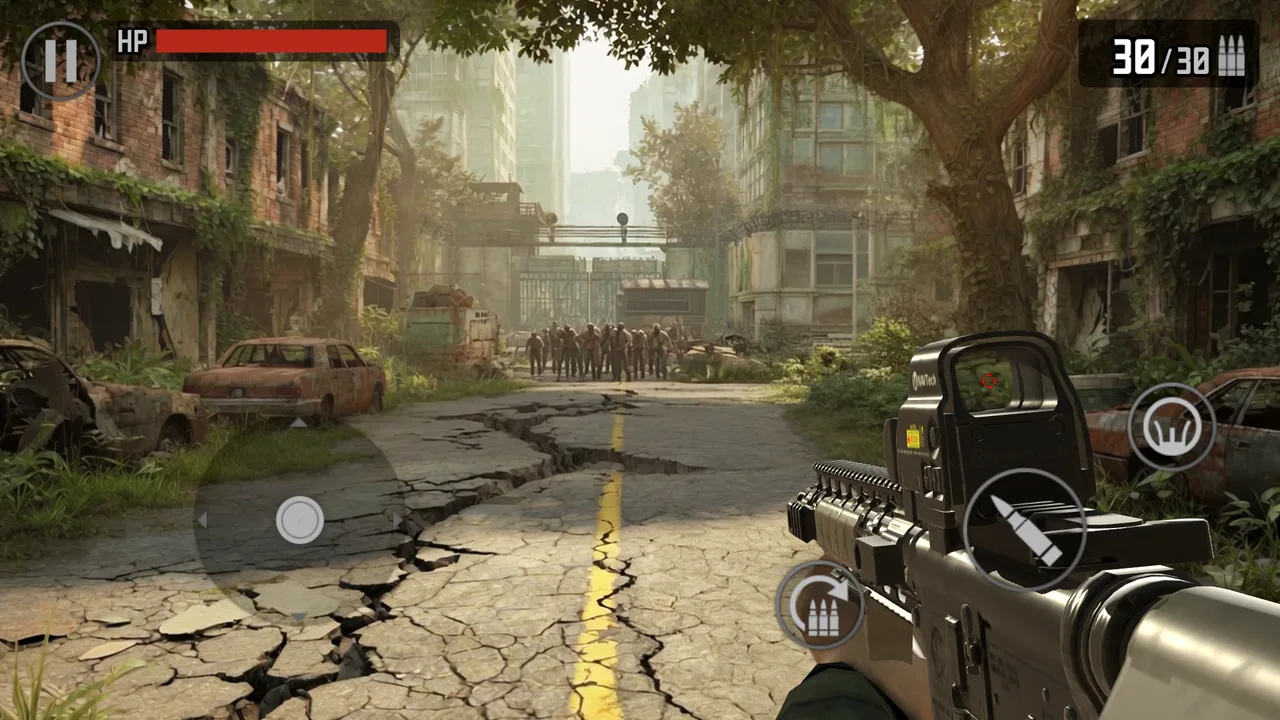
I find the game’s action easiest to judge by paying attention to its central demand: spotting a threat and making a controlled shot, rather than managing a character through constant movement. That gives each encounter a more deliberate rhythm, but it also makes visual clarity and steady touch input important. In the next section, I’ll look at how that focused setup affects the way a session feels in practice.
Readable objectives and a focused interface
The strongest accessibility advantage here is conceptual clarity. A sniper-focused zombie game gives me an obvious task: watch the scene, identify the threat, aim, and fire at the right moment. That limited loop is easier to understand than a game that combines crafting, inventory management, open-world navigation, and several kinds of combat at once. If you prefer games that explain themselves through direct action, this is a more approachable starting point than a complicated survival sandbox.
The visual design also benefits from having a single combat role. I am not constantly switching between a dozen weapons or learning a large collection of character abilities before I can enjoy a level. That does not mean every screen will be equally easy to read. Zombie games often rely on dark settings, movement in the background, sudden targets, and visual effects to create tension. Players who have difficulty separating foreground objects from busy scenery may find the central task less comfortable than the basic premise suggests.
I found it useful to treat the screen as a hierarchy rather than trying to study every detail. The immediate target and aiming area deserve attention first; decorative destruction, background movement, and dramatic effects are secondary. This is a small but practical habit. It reduces visual overload and helps me keep the important information in view, especially when several enemies appear close together.
Navigation is likely to feel more manageable for people who prefer a linear session over a map full of destinations. The game’s identity is based on encounters rather than wandering, so it does not ask me to remember a complicated world layout before I can make progress. That makes it suitable for short attention windows. I can play a brief session without needing to reconstruct a long-term route or remember a distant objective.
Why the sniper perspective changes the experience
The sniper viewpoint creates an interesting trade-off. On one hand, it reduces the physical chaos of a traditional run-and-gun shooter. I am not necessarily steering a character through every corner while aiming, jumping, and reloading at the same time. On the other hand, the game places more pressure on visual precision. A small aiming error can matter more when the entire challenge is built around a well-placed shot.
That makes the game a better fit for players who enjoy deliberate timing than for people who want constant movement. If you normally find fast arena shooters tiring because the screen changes too quickly, this format may feel calmer in some moments. If your difficulty is fine aiming on a touchscreen, however, the slower viewpoint does not automatically solve the problem. The game still asks for controlled movement and reliable target selection.
My practical advice is to play with the device held steadily and avoid judging the controls during a rushed first attempt. A sniper game can feel awkward when I am learning the touch response, but the same controls become more predictable once I use small movements instead of dragging aggressively. Short, gentle adjustments are usually easier to repeat than large swipes, particularly when a target is already near the center of the screen.
Motor demands and the value of pacing
The main motor question is not whether the game has action, but how much precision it expects from the player. Touch aiming can be comfortable for someone with steady fine-motor control, while it may be frustrating for a player affected by tremor, fatigue, reduced dexterity, or difficulty holding a consistent gesture. The sniper format gives me more time to think than a frantic close-range shooter, but accuracy remains part of the core challenge rather than an optional extra.
This is where pacing becomes an important personal strategy. I would not approach every encounter as a test of speed. I would first identify which target is most urgent, settle the aim, and then fire. That method can reduce unnecessary gestures and prevent the common mistake of chasing every movement on screen. It also makes the game more approachable for players who can manage careful actions better than rapid repeated inputs.
There is a useful distinction between physical access and performance. A player may be able to operate the controls but still dislike the pressure of being punished for a missed shot. Conversely, someone who finds rapid movement difficult may appreciate the chance to pause mentally before firing. The right fit depends on whether your limitation is caused by speed, precision, visual tracking, or the stress of making a decision under pressure.
I would avoid assuming that a larger phone automatically makes the game easier. A bigger display can give targets more visual space, but it may also be harder to hold for a long session. A smaller device can be lighter while making aiming details more compact. The best setup is the one that lets you keep the screen stable without straining your hands or wrists.
Sensory load: atmosphere versus comfort
The mature rating is significant because the game’s subject is violent zombie combat. Anyone sensitive to undead imagery, shooting, impact effects, or apocalyptic themes should consider that before playing. This is not a harmless cartoon puzzle dressed in zombie clothing. The tone is built around danger and killing enemies, and that atmosphere may be exactly what fans of the genre want while being a clear reason for others to skip it.
Visual intensity can also affect concentration. Dark scenes may create mood, but they can make silhouettes and environmental details harder to distinguish. Bright flashes, sudden movement, and repeated combat effects may be tiring for players who are sensitive to motion or contrast changes. I found that shorter sessions are a sensible way to test comfort. If my eyes feel strained or I start missing targets because the screen has become visually busy, continuing usually makes the experience worse rather than more enjoyable.
Sound is another situational consideration. A shooter can be played in a public place only if the audio is comfortable to manage, and not every player wants weapon effects or zombie sounds during a commute. Since the game is offline, it is convenient for travel, but offline access does not mean it is automatically suitable for every environment. I would test a quiet session with the device muted or at a low volume before relying on it as a regular waiting-room game.
Playing in real-world situations
The best everyday use case is a short, interrupted break. Imagine waiting for a train with ten minutes available and no dependable connection. A focused sniper encounter can fill that gap without requiring a team to be online or a long story sequence to be remembered. If the train arrives, I can stop rather than leaving other players waiting. That independence is more useful to me than a large amount of content I can access only under ideal conditions.
At home, the game works differently. I can give it more attention, hold the phone in a stable position, and take time to learn how the aiming feels. That is the better environment for anyone who needs a quieter pace or wants to understand the visual cues. Playing while walking, riding a bicycle, or doing another task would be a poor choice because the game depends on visual focus and controlled touch input.
The offline design also changes expectations around connectivity. Players who want competitive multiplayer, live cooperation, or a constantly changing online world should look elsewhere. The benefit is reliability and privacy from a practical standpoint: I can focus on the game without coordinating with strangers. The trade-off is that the experience is more self-contained and may feel repetitive sooner than an online game with human opponents.
For accessibility in shared spaces, I would consider the screen before the genre label. A player with photosensitivity concerns, visual fatigue, or discomfort around violent imagery should test a brief session rather than committing to long play. A player who needs spoken guidance or highly adjustable presentation should also be cautious. I can describe the game’s focused structure, but I would not assume that a simple objective means every sensory need is covered.
Where the free model creates friction
The game is free, but it includes purchases ranging from $0.99 to $99.99 per item. That matters because a free download can still create pressure during progression, retries, upgrades, or other moments where convenience is offered for money. I would approach it with a fixed personal rule: play the opening sessions without buying anything, decide whether the core loop is enjoyable on its own, and only then consider whether an optional purchase genuinely improves the experience.
This is especially important for younger players, although the mature age rating already makes it unsuitable for children. Adults who share a device should still keep spending expectations clear. A player who dislikes repeated prompts, resource management, or any feeling that progress is being nudged toward purchases may have a better time with a paid action game that offers a more predictable cost.
There is also a time trade-off. Sniper games can be satisfying when each shot feels deliberate, but the same structure may become repetitive if the encounters do not provide enough variation for your taste. I would recommend it to someone who enjoys refining aim and repeating a compact combat loop. I would not recommend it to a player who needs exploration, character development, or a wide range of play styles to stay interested.
What to expect from the current build
The current version is 2.1, and the game was released on August 24, 2022. Those details place it in a mature part of its life rather than presenting it as a brand-new experiment. That can be reassuring for someone who wants an established title, but it also means I would not choose it expecting the novelty of a freshly launched shooter. The important question is whether its focused design still matches what I want from a mobile game.
It requires Android 9 or later, so compatibility should be checked before installation. That requirement is not demanding by modern standards, but people using older phones may need to confirm their operating system first. Device age can also affect comfort: even when a phone technically runs the game, heat, battery drain, or inconsistent performance may make precise aiming less pleasant during longer sessions.
I would begin with a short test rather than downloading it as a permanent recommendation for everyone. Check whether the targets are easy for you to distinguish, whether touch aiming feels controllable, and whether the mature presentation is comfortable. Then try playing in the environment where you expect to use it. A game that feels fine at a desk may be less suitable on a moving bus or while holding the phone one-handed.
Who should choose it, and who should pass
I think this is a good match for fans of offline zombie shooters who want a direct objective and do not need multiplayer. It is also a reasonable option for players who prefer measured aiming over constant character movement. The game’s strongest quality is its commitment to one recognizable fantasy: surviving a zombie outbreak by making accurate shots.
It is less suitable for people who want a gentle, nonviolent game, a bright and low-stimulation presentation, or a story-led adventure with extensive exploration. Players with significant difficulty performing precise touch gestures may also find the central mechanic more frustrating than relaxing. In those cases, a turn-based game, a puzzle title, or an action game with more forgiving controls would probably be a better choice.
Compared with a conventional run-and-gun zombie game, this one should appeal to someone who wants fewer simultaneous movement demands. Compared with a full survival game, it is easier to pick up but offers less of the broader planning that comes from gathering, crafting, and exploring. Compared with a multiplayer shooter, it is more flexible for disconnected play but cannot provide the unpredictability of human opponents. Those are not flaws by themselves; they define the audience.
My inclusive verdict
After considering both playability and context, I see this as a focused action game with a clear entry point and a specific set of demands. Its offline format is genuinely useful, its sniper perspective can feel more controlled than a frantic shooter, and the simple objective makes it easy to understand. The mature zombie violence, touch-precision requirement, visual intensity, and optional spending are the main reasons I would not recommend it without qualification.
The best way to approach it is as a short-session precision game, not as an all-purpose mobile shooter. Start in a stable, comfortable setting, use small aiming movements, and stop when the screen or your hands begin to feel tired. If you enjoy repeating a focused combat loop and want something playable without a connection, it is worth trying at no download cost. If you need extensive accessibility controls, a calm atmosphere, cooperative play, or a predictable one-time purchase, another genre or a different action game will likely serve you better.
For my own recommendation, I would put it in the “try it carefully” category. The high user response and large install base show that the formula has broad appeal, but the right decision depends on how your eyes, hands, and attention respond to the game. When those fit, the compact sniper encounters can be satisfying. When they do not, the same narrow focus becomes the barrier rather than the attraction.
FAQs for Zombie Sniper War 3 - Fire FPS
01What is Zombie Sniper War 3 - Fire FPS?
Zombie Sniper War 3 - Fire FPS is an action shooting game focused on long-range combat against waves of undead enemies. You take the role of a sniper, search for targets from a distance, and eliminate zombies before they reach survivors or objectives. The game combines mission-based progression, weapon upgrades, and fast decisions with a simple pick-up-and-play control style.
02How does the gameplay work in Zombie Sniper War 3 - Fire FPS?
Gameplay generally revolves around observing the environment through a sniper scope, identifying incoming zombies, and aiming carefully for accurate shots. Some missions may require prioritizing stronger enemies, protecting characters, or completing objectives within a limited situation. Players should expect a mixture of precision shooting and action, with success depending on timing, target selection, ammunition management, and improving equipment as missions become more difficult.
03Can I play Zombie Sniper War 3 - Fire FPS offline?
The game may allow certain shooting missions to be played without a continuous internet connection, which is useful when traveling or using limited mobile data. However, features such as advertisements, rewards, updates, cloud synchronization, or other online services may require connectivity. Before downloading, check the store listing and test the game on your device, because offline availability can vary by version, platform, and developer updates.
04Does Zombie Sniper War 3 - Fire FPS include in-app purchases or advertisements?
Like many free-to-download mobile shooting games, Zombie Sniper War 3 - Fire FPS may include advertising and optional purchases. Ads can appear between missions or when claiming bonus rewards, while purchases may provide currency, upgrades, weapons, or other progression benefits. Review the app-store payment information before installing, and use device purchase restrictions if children will be playing on the same device.
05What devices are recommended for Zombie Sniper War 3 - Fire FPS?
The game should run best on a reasonably modern Android or iOS device with enough free storage, updated system software, and stable graphics performance. Older phones may experience longer loading times, reduced frame rates, or occasional crashes, particularly during visually busy missions. Check the official store page for the latest operating-system requirements, permissions, download size, and compatibility details before proceeding with installation.
Pros
- Fast-paced sniper gameplay with satisfying long-range shots.
- Simple controls make it easy to start playing immediately.
- Zombie waves provide constant action and pressure.
- Weapon upgrades add progression and improve combat power.
- Short missions work well for quick gaming sessions.
Cons
- Gameplay can become repetitive after extended play.
- Some upgrades may require considerable grinding.
- Enemy variety may feel limited in later stages.
- Ads can interrupt the experience between missions.
- Offline features and content may be somewhat limited.

Zombie Sniper War 3 - Fire FPS
Gallery